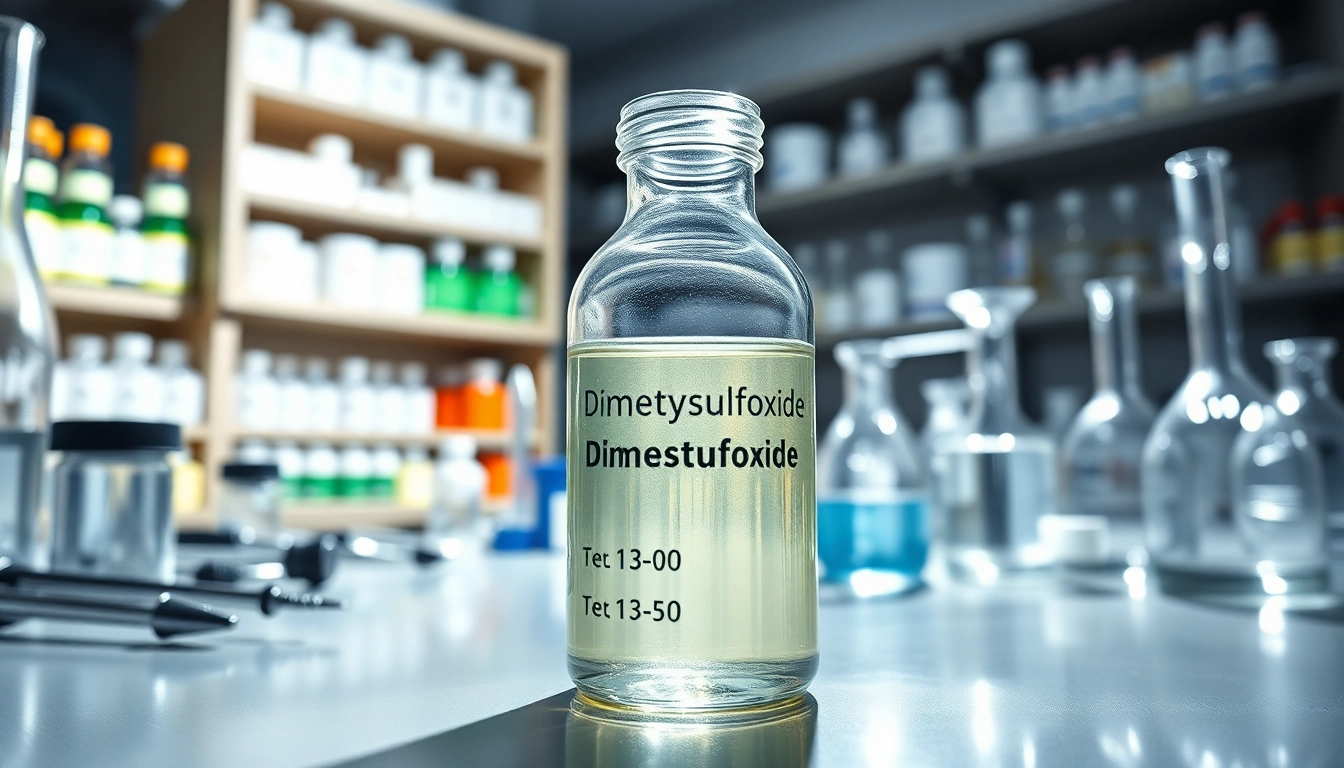
What is Dimethylsulfoxide?
Dimethylsulfoxide, commonly referred to as DMSO, is an organosulfur compound with the chemical formula (CH3)2SO. It is a colorless, odorless liquid that exhibits unique properties making it widely utilized across various industries. Notably, DMSO is recognized for its ability to penetrate biological membranes, which raises its potential for both medical and industrial applications. To understand its significance better, it’s essential to explore its dimethylsulfoxide characteristics more deeply.
Chemical Structure and Properties
The chemical structure of dimethylsulfoxide comprises a sulfur atom bonded to an oxygen atom and two methyl groups. This unique structure imparts several properties:
- Polarity: DMSO is a polar aprotic solvent, making it an excellent solvent for a wide range of organic and inorganic compounds.
- High Boiling Point: With a boiling point of 189°C, it remains stable under various conditions.
- Low Toxicity: Compared to other solvents, DMSO is characterized by low toxicity, rendering it safer for various applications.
History and Discovery
The discovery of dimethylsulfoxide dates back to the mid-19th century when it was first synthesized from the wood pulping process. It gained prominence in the 20th century as researchers began to explore its unique solvent properties and its ability to penetrate tissues. Initially utilized in industrial applications, DMSO found its way into medicine due to its anti-inflammatory properties, leading to a resurgence of interest in various therapeutic uses throughout the decades.
Common Uses in Various Industries
Dimethylsulfoxide is versatile and finds utility in multiple sectors:
- Pharmaceuticals: Utilized as a solvent in drug formulation and delivery.
- Cosmetics: Incorporated in creams and ointments for its skin-penetrating abilities.
- Agriculture: Used as a carrier for herbicides and pesticides due to its ability to enhance absorption.
- Laboratory Research: Serves as a solvent in biochemical assays, given its compatibility with biological systems.
Health Benefits of Dimethylsulfoxide
The health benefits associated with dimethylsulfoxide have garnered significant attention, particularly due to its anti-inflammatory and pain-relieving properties. Here, we delve deeper into its therapeutic applications.
Anti-Inflammatory Properties
Research indicates that DMSO exhibits significant anti-inflammatory effects. It functions by inhibiting the production of inflammatory mediators, which can alleviate various inflammatory conditions. In clinical settings, DMSO has been effectively used in treating conditions like arthritis and musculoskeletal injuries.
Potential Pain Relief Applications
The analgesic properties of dimethylsulfoxide are linked to its ability to modulate pain pathways. It has been applied topically to reduce pain related to injuries and inflammatory diseases. Studies have suggested that it may help with conditions like fibromyalgia and post-operative pain, improving the overall quality of life for patients.
Role in Wound Healing
Dimethylsulfoxide has shown promise in promoting wound healing due to its ability to enhance cellular permeability and facilitate the transport of therapeutic agents. It is often included in formulations intended for treating skin injuries, burns, and surgeries, where rapid healing is crucial.
Dimethylsulfoxide in Medicine
The role of dimethylsulfoxide in medical applications is multifaceted, providing therapeutic solutions along with its accompanying risks. Understanding these aspects is crucial for safe utilization.
Clinical Uses and Guidelines
In clinical scenarios, DMSO is typically administered topically or via injection. It is essential to follow specific guidelines to maximize its benefits while minimizing side effects:
- Topical Application: DMSO should be applied only to intact skin to avoid systemic absorption. It's advisable to consult a healthcare professional beforehand.
- Dosage Considerations: Appropriate dosage varies based on the condition being treated; thus, dosing guidelines should be adhered to strictly.
Side Effects and Precautions
While DMSO is generally safe, it may cause side effects like skin irritation, garlic-like taste, and other allergic reactions in some individuals. Pre-treatment assessments, including skin tests, are recommended. Additionally, DMSO can carry other contaminants into the bloodstream, necessitating caution when using on wounds or lesions.
Alternatives to Dimethylsulfoxide
Numerous alternatives exist for those unable or unwilling to use dimethylsulfoxide. Other topical formulations containing corticosteroids or NSAIDs may provide similar anti-inflammatory relief without the complexity associated with DMSO. Each alternative comes with unique benefits and potential side effects, necessitating close evaluation.
How to Use Dimethylsulfoxide Safely
Ensuring safe use of dimethylsulfoxide is vital for realizing its health benefits while minimizing adverse effects. Here are some best practices:
Dosage Recommendations
Consulting with a healthcare provider is essential to determine the right dosage of DMSO based on treatment goals and individual health conditions. Typically, concentrations range from 50% to 90% for topical applications, while injections should be performed under medical supervision.
Application Methods
DMSO can be applied topically via gels, ointments, or solutions. Using sterile techniques and ensuring the skin is clean prior to application can minimize risks. For injections, healthcare professionals should strictly follow aseptic protocols.
Storage and Handling Instructions
Dimethylsulfoxide should be stored in a cool, dry place away from sunlight. Ensure containers are tightly sealed to prevent contamination and maintain purity. It is crucial to check expiry dates and discard any expired products.
Future Perspectives on Dimethylsulfoxide
The future of dimethylsulfoxide in various sectors seems promising as ongoing research explores its potential applications. Understanding these prospects can shed light on emerging trends and issues.
Research and Emerging Applications
There is ongoing research exploring DMSO's role in drug delivery systems, as well as its potential to serve as a chemoprotectant in cancer therapy. Innovative studies are assessing how DMSO can be formulated with other agents to enhance therapeutic efficacy further. Advances in biotechnology may expand its medical applications, making it a focal point in pharmaceuticals.
Potential Market Growth
The global market for DMSO is poised for growth. Increased awareness of its therapeutic benefits is driving demand in healthcare and the pharmaceutical industry. As research unfolds, expanding industrial applications may also contribute to market dynamics, encouraging commercial partnerships and advancements in production technologies.
Ethical Considerations in Usage
Even with promising potential benefits, ethical considerations arise related to the use of dimethylsulfoxide in human applications. Ensuring patient safety, the integrity of clinical trials, and addressing any ethical dilemmas in research methodologies will be pivotal in advancing its applications while maintaining public trust.
Frequently Asked Questions
1. Is DMSO safe for topical use?
While DMSO is generally safe for topical application, it can cause skin irritation and should not be used on broken skin or open wounds.
2. Can DMSO be used in pets?
Yes, DMSO can be used in veterinary medicine, but its application should only be done under a veterinarian's guidance to ensure safety.
3. How does DMSO work to relieve pain?
DMSO works by modulating pain pathways and reducing inflammation, leading to a decrease in discomfort for conditions like arthritis.
4. What forms of DMSO are available?
DMSO is available in various forms, including topical gels, creams, and injectable solutions, tailored for specific applications.
5. Can DMSO interact with other medications?
Yes, DMSO can enhance the absorption of other medications, potentially leading to interactions. Always consult a healthcare provider before use.